


Lesson 8: Delay Gratification
Worth the Wait
QUOTES
Delayed Gratification: Delayed gratification is the ability to resist immediate temptations in favor of long-term rewards. It involves self-discipline and foresight, recognizing that short-term sacrifices are often necessary to achieve lasting success. Whether in health, finances, education, or career goals, those who practice delayed gratification tend to make better decisions and achieve more over time. This principle is evident in actions like saving money instead of spending impulsively, studying instead of partying, or exercising instead of lounging. While it can be challenging in a world that promotes instant satisfaction, cultivating patience and long-term thinking builds resilience and strengthens character. Research, such as the famous “Marshmallow Test,” shows that individuals who can delay gratification often experience greater life success and well-being. Ultimately, the willingness to endure discomfort now for future gain is a powerful habit that transforms goals into achievements and dreams into reality. Long-term wins are built on short-term discipline.
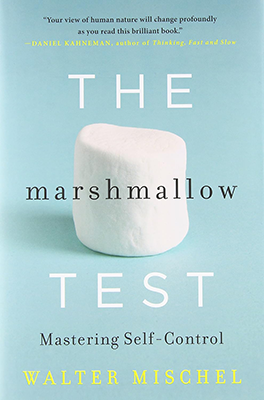
The Marshmallow Test
The Marshmallow Test
In The Marshmallow Test, psychologist Walter Mischel explores the nature of self-control and how it shapes our lives, based on his landmark experiment from the 1960s. The original test involved giving preschoolers a choice: they could eat one marshmallow immediately or wait 15 minutes and receive two. The study became a powerful symbol for the ability to delay gratification — and its implications stretched far beyond childhood.
Mischel found that the children who were able to wait for the second marshmallow tended to have better life outcomes later on. These included higher SAT scores, better academic performance, healthier behaviors, stronger social skills, and more resilience in the face of stress. The key takeaway: the capacity to delay gratification is linked to long-term success.
However, Mischel emphasizes that self-control is not a fixed trait. It can be taught, strengthened, and improved. This challenges the idea that willpower is something you’re simply born with. Instead, Mischel views it as a skill — like learning to ride a bike or play an instrument.
Central to the book is the concept of two systems in the brain:
The “hot system” is impulsive and emotional — it drives immediate reactions and desires.
The “cool system” is rational and reflective — it helps regulate behavior and plan for the future.
Children who used strategies to activate their cool system — like distraction, imagination, or reframing the situation — were more likely to resist temptation. These same cognitive strategies are relevant to adults trying to stick to goals, resist bad habits, or make better choices.
Mischel also discusses how environment and trust influence self-control. If a child lives in an unpredictable or chaotic environment, delaying gratification may not seem logical — they may doubt the reward will come at all. Thus, belief systems, family stability, and social context all play vital roles.
The book closes with practical insights into how adults can improve self-control: by changing how they think about situations, creating supportive environments, and using techniques like visualization and implementation intentions.
Ultimately, “The Marshmallow Test” is not just about resisting sweets — it’s about understanding human behavior and learning how to take control of our impulses to build a better future.