
Lesson 26: Listening Skills
Listen More
QUOTES
Listening is one of the most underrated yet powerful tools in leadership, communication, and relationships. When you truly listen—without interrupting, rehearsing your response, or letting your assumptions take over—you uncover what people actually need, not just what they say. Speaking often feels like control, but real influence comes from understanding. Customers, teammates, partners—they’ll tell you what they value, what’s broken, and what they hope for, but only if you create the space for them to be heard. Listening builds trust, reveals hidden insights, and prevents costly missteps. It signals respect and emotional intelligence, two traits that consistently distinguish great leaders from average ones. When you listen more than you speak, your words carry greater weight because they’re informed, intentional, and relevant. In a world full of noise and distraction, listening is a competitive advantage—one that requires humility, patience, and presence.
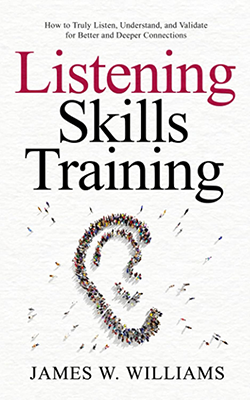
Listening Skills Training
In “Listening Skills Training: How to Truly Listen, Understand, and Validate for Better and Deeper Connections”, James W. Williams presents a practical guide to mastering the art of listening—a skill essential for building meaningful relationships and effective communication. Williams explores the psychology behind listening, emphasizing the importance of empathy, emotional awareness, and validation in conversations. He identifies common barriers such as personal biases and emotional distractions that hinder effective listening and offers strategies to overcome them. The book provides actionable techniques, including reading body language, recognizing deceptive cues, and responding thoughtfully, to enhance one’s listening abilities. By cultivating these skills, readers can improve personal and professional interactions, fostering deeper connections and mutual understanding. Williams’ insights serve as a valuable resource for anyone seeking to enhance their communication skills and build stronger, more empathetic relationships.