

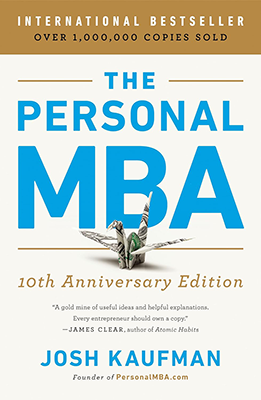
1. What is the central premise of The Personal MBA?
A) An MBA is necessary for business success
B) Traditional MBA programs are too affordable
C) You can gain practical business knowledge without a formal MBA
D) Business education should be reserved for entrepreneurs only
Correct Answer: C
Explanation: Kaufman argues that you don’t need to spend a fortune on a traditional MBA to learn essential business skills—you can self-educate using the right resources.
2. According to Kaufman, which of the following is one of the “5 Parts of Every Business”?
A) Fundraising
B) Customer Support
C) Value Creation
D) Market Segmentation
Correct Answer: C
Explanation: The 5 Parts of Every Business include: Value Creation, Marketing, Sales, Value Delivery, and Finance.
3. What does Kaufman describe as the most valuable form of capital?
A) Intellectual capital
B) Human capital
C) Social capital
D) Financial capital
Correct Answer: C
Explanation: Kaufman highlights social capital—your network and relationships—as one of the most powerful and leverageable assets in business.
4. What is the concept of the “Iron Law of the Market”?
A) The most efficient business wins
B) You must create something people want to buy
C) The market always favors large corporations
D) Success depends on marketing spend
Correct Answer: B
Explanation: The Iron Law of the Market emphasizes that the existence of a market for your product or service is the most important factor for business success.
5. In The Personal MBA, what is the “Iteration Cycle”?
A) A rigid plan for business development
B) A funding and investment strategy
C) A method for continuous improvement through feedback
D) A hiring process for startups
Correct Answer: C
Explanation: The Iteration Cycle is a process of testing, feedback, and improvement. It’s central to developing effective products and services.