

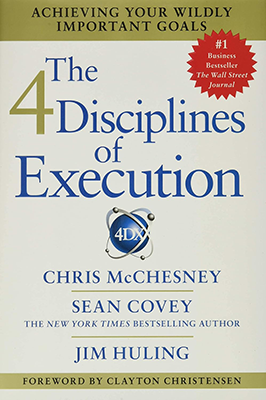
Quiz: The 4 Disciplines of Execution (4DX) by Chris McChesney
1. What is the main objective of the 4 Disciplines of Execution (4DX)?
A. To improve customer retention
B. To reduce operating costs
C. To help organizations execute their most important goals
D. To create more efficient marketing campaigns
2. What is a “Wildly Important Goal” (WIG) in the 4DX framework?
A. A financial target set by the executive team
B. A daily task that must be completed without fail
C. A goal that is so important, it must not fail—even at the expense of lesser goals
D. A long-term vision that guides a company’s mission
3. According to the 4DX method, what is the “Whirlwind”?
A. A brainstorming session
B. The daily work and urgent tasks that keep an organization running
C. The company’s growth strategy
D. A rapid decision-making process
4. Which of the following best describes Discipline 2: Act on the Lead Measures?
A. Focus only on year-end financial results
B. Track lagging indicators like revenue
C. Identify and act on behaviors that drive success on the WIG
D. Prioritize employee satisfaction surveys
5. What is the purpose of the “Cadence of Accountability” (Discipline 4)?
A. To review annual performance reviews
B. To ensure employees report to their supervisors regularly
C. To create a weekly rhythm of reporting and commitment toward the WIG
D. To track personal development plans
Answer Key with Explanations
1. C. To help organizations execute their most important goals
Explanation: 4DX provides a framework to close the gap between strategic goals and actual execution by focusing on a few high-impact objectives.
2. C. A goal that is so important, it must not fail—even at the expense of lesser goals
Explanation: WIGs are the highest-priority goals, selected to sharpen focus and energy where it matters most. Trying to accomplish too many goals at once dilutes impact.
3. B. The daily work and urgent tasks that keep an organization running
Explanation: The “Whirlwind” represents the operational day-to-day work that consumes time and energy, often preventing teams from focusing on strategic goals unless consciously managed.
4. C. Identify and act on behaviors that drive success on the WIG
Explanation: Lead measures are proactive, predictive activities that drive future performance. Unlike lag measures, which reflect past performance, lead measures can be influenced directly.
5. C. To create a weekly rhythm of reporting and commitment toward the WIG
Explanation: Discipline 4 establishes accountability by having team members make personal commitments in a recurring meeting, creating momentum and ownership toward the WIG.