

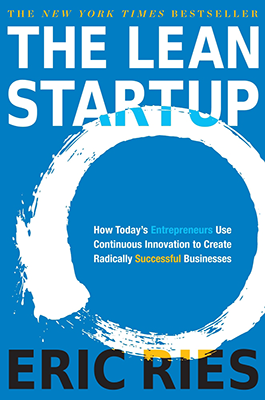
Quiz: The Lean Startup by Eric Ries
Question 1:
What is the primary goal of the Build-Measure-Learn loop in the Lean Startup methodology?
A. To develop a fully functional product before launching
B. To secure funding from venture capitalists
C. To test hypotheses and iterate quickly based on feedback
D. To increase production capacity
Question 2:
What is a Minimum Viable Product (MVP)?
A. A final product with complete features
B. A prototype that is not shared with users
C. The simplest version of a product that allows validated learning
D. A marketing strategy used after product development
Question 3:
According to The Lean Startup, which metric is considered a vanity metric?
A. Revenue per user
B. Total number of app downloads
C. Customer retention rate
D. Conversion rate from free to paid users
Question 4:
What does “pivot” mean in Lean Startup terms?
A. To switch industries entirely
B. To abandon the startup and start over
C. To make a fundamental change to the product or business model based on validated learning
D. To expand the product line
Question 5:
Why does Ries emphasize validated learning?
A. It speeds up time-to-market
B. It reduces costs by avoiding unnecessary features
C. It helps entrepreneurs learn what customers really want through scientific experimentation
D. It increases the chances of attracting investors
Answers & Explanations
1. Answer: C
Explanation: The Build-Measure-Learn loop is central to the Lean Startup approach. It focuses on quickly building a product, measuring user interaction, and learning whether to pivot or persevere—thereby reducing wasted effort and increasing the chance of building something customers actually want.
2. Answer: C
Explanation: An MVP is designed to test hypotheses with the least effort and resources. It allows startups to gain validated learning about customers with minimal development.
3. Answer: B
Explanation: Vanity metrics, like total app downloads, may look impressive but don’t necessarily correlate with business success or customer engagement. Actionable metrics (e.g., retention rate) are more valuable for decision-making.
4. Answer: C
Explanation: A pivot involves a strategic change—such as modifying the product, business model, or target audience—based on insights from customer feedback and data.
5. Answer: C
Explanation: Validated learning is the process of demonstrating empirically that a team has discovered valuable truths about a startup’s present and future business prospects. It’s not just about speed but about learning the right things.