

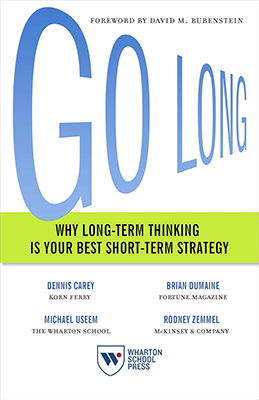
Quiz: Go Long by Dennis Carey et al.
1. What is the central thesis of Go Long?
A) Short-term profits are more important than long-term investments
B) Shareholder value should always be prioritized above all else
C) Companies thrive when they focus on long-term strategy and resist short-term pressures
D) Cutting costs is the most sustainable way to grow a business
2. Which of the following is NOT identified in the book as a hallmark of long-term thinking CEOs?
A) Building resilient corporate cultures
B) Managing quarterly earnings obsessively
C) Investing in future capabilities
D) Driving systemic change in their industries
3. According to Go Long, what role do boards of directors play in promoting long-term value creation?
A) They should focus exclusively on financial metrics
B) They must support CEOs who are willing to make bold, long-term investments
C) They should micromanage executive decisions
D) They are encouraged to remain neutral and avoid influencing company direction
4. The authors emphasize that long-term value creation often requires:
A) Avoiding all types of risk
B) Cutting innovation budgets
C) Making bold bets that may not pay off immediately
D) Relying solely on legacy business models
5. Which of the following companies is featured in the book as an example of long-term leadership and strategic discipline?
A) Kodak
B) IBM
C) Unilever
D) Enron
Answer Key & Explanations
1. C) Companies thrive when they focus on long-term strategy and resist short-term pressures
Explanation: The book’s core message is that leaders should “go long” by prioritizing sustained, long-term value creation over the pressure of quarterly earnings or near-term stock performance.
2. B) Managing quarterly earnings obsessively
Explanation: The authors criticize the obsession with quarterly results, arguing it leads to short-termism. True long-term leaders invest in future growth, culture, and innovation.
3. B) They must support CEOs who are willing to make bold, long-term investments
Explanation: The book stresses the importance of active and aligned boards that back visionary leaders who prioritize long-term strategic moves even when they face investor pressure.
4. C) Making bold bets that may not pay off immediately
Explanation: Long-term thinking often means committing resources to opportunities that may take years to yield results, which contrasts with the “quick wins” mindset of short-termism.
5. C) Unilever
Explanation: Unilever is cited as a company that exemplifies long-term leadership, particularly under Paul Polman, who resisted providing quarterly earnings guidance to focus on sustainability and growth.