

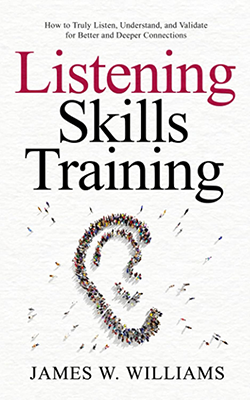
Quiz: Listening Skills Training by James Williams
1. What is the core goal of effective listening as presented in the book?
A) To give the listener a chance to respond quickly
B) To win arguments and debates
C) To understand, validate, and connect with the speaker
D) To gather information for later use
2. According to James Williams, what is the biggest obstacle to active listening?
A) Lack of vocabulary
B) Poor memory
C) The tendency to focus on what we want to say next
D) Emotional intelligence
3. What technique does the book recommend to show genuine understanding during a conversation?
A) Parroting back the speaker’s exact words
B) Nodding constantly
C) Paraphrasing the speaker’s message in your own words
D) Taking detailed notes during the conversation
4. What role does empathy play in effective listening, according to the book?
A) It’s secondary to logic and structure
B) It helps create emotional safety and trust
C) It often clouds objectivity
D) It should be used only in personal relationships
5. How does the book define “validation” in the context of listening?
A) Agreeing with everything the speaker says
B) Repeating the speaker’s emotions back to them
C) Acknowledging the speaker’s feelings and perspective as real and important
D) Correcting misconceptions as they arise
Answer Key & Explanations
1. C) To understand, validate, and connect with the speaker
Explanation: The book emphasizes that effective listening is not about replying or winning, but about deeply understanding and emotionally connecting with the speaker to build trust and improve communication.
2. C) The tendency to focus on what we want to say next
Explanation: Williams explains that many people listen with the intent to reply rather than understand, which prevents full engagement with the speaker’s message.
3. C) Paraphrasing the speaker’s message in your own words
Explanation: Paraphrasing shows that you’re truly listening and processing what was said, rather than just waiting to speak. It also helps confirm mutual understanding.
4. B) It helps create emotional safety and trust
Explanation: Empathy allows the listener to connect with the speaker’s emotions, creating a space where the speaker feels heard, safe, and respected.
5. C) Acknowledging the speaker’s feelings and perspective as real and important
Explanation: Validation doesn’t require agreement, but it involves honoring the speaker’s emotional experience, which is critical for effective, compassionate communication.