

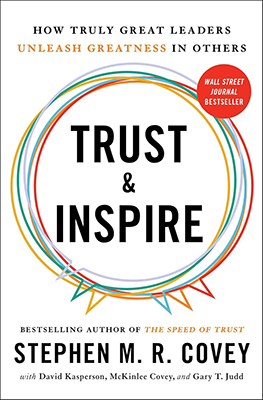
Quiz: Trust & Inspire by Stephen M. R. Covey
1. What is the main leadership philosophy presented in Trust & Inspire?
A) Command and control
B) Micromanagement and measurement
C) Trust and inspire
D) Vision and verification
2. According to Covey, what is a key reason the “Command & Control” leadership model is outdated?
A) It is too expensive to implement
B) It relies too heavily on digital tools
C) It suppresses creativity and intrinsic motivation
D) It promotes too much employee autonomy
3. What is the primary outcome Covey says a “Trust & Inspire” leader should aim for?
A) Short-term productivity spikes
B) Compliance and process adherence
C) Control of organizational systems
D) Unleashing the greatness within people
4. In the book, Covey emphasizes that great leaders see people as:
A) Resources to manage
B) Problems to fix
C) Whole people with body, heart, mind, and spirit
D) Cogs in a performance machine
5. Which of the following is NOT a key behavior of a “Trust & Inspire” leader as outlined by Covey?
A) Modeling authentic behavior
B) Commanding excellence
C) Extending trust intentionally
D) Connecting through genuine caring
Answer Key & Explanations
1. C) Trust and inspire
Explanation: Covey contrasts the outdated “Command & Control” model with the modern, empowering “Trust & Inspire” approach, which focuses on developing people, not just processes.
2. C) It suppresses creativity and intrinsic motivation
Explanation: The book highlights that traditional leadership styles limit innovation and engagement by failing to tap into people’s internal drive and creative potential.
3. D) Unleashing the greatness within people
Explanation: The ultimate goal of a “Trust & Inspire” leader is to elevate others, helping them realize their full potential and perform at their highest level.
4. C) Whole people with body, heart, mind, and spirit
Explanation: Covey urges leaders to recognize the full humanity of their teams, not just their productivity or job function. People are emotional, intellectual, physical, and spiritual beings.
5. B) Commanding excellence
Explanation: While “modeling,” “trusting,” and “connecting” are central to Covey’s approach, “commanding excellence” reflects an authoritarian style inconsistent with the Trust & Inspire model.