

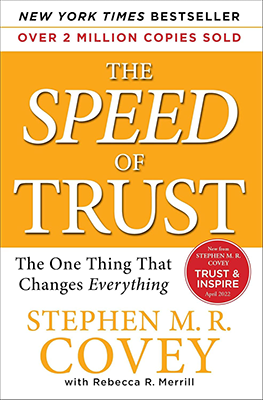
Quiz: The Speed of Trust
1. According to Covey, which of the following best describes the economic impact of trust?
A) Trust has no measurable effect on business outcomes.
B) High trust increases speed and reduces costs.
C) High trust slows processes but improves quality.
D) Low trust improves decision-making accuracy.
2. Which of the following is NOT one of Covey’s “Five Waves of Trust”?
A) Self Trust
B) Relationship Trust
C) Global Trust
D) Societal Trust
3. In The Speed of Trust, “Self Trust” is primarily built upon which personal quality?
A) Integrity
B) Charisma
C) Networking ability
D) Creativity
4. Which of these is one of Covey’s 13 Behaviors of High Trust?
A) Always agreeing to avoid conflict
B) Keep commitments
C) Avoid taking responsibility for mistakes
D) Limit transparency to protect reputation
5. Covey emphasizes that when trust is broken, the first step in rebuilding it is to:
A) Forget the past and move forward
B) Deflect blame onto external factors
C) Take responsibility and apologize
D) Change the team members involved
Answers & Explanations
-
B) High trust increases speed and reduces costs.
Covey explains that trust functions as a performance multiplier. High trust eliminates delays and reduces transaction costs, while low trust adds bureaucracy and slows execution. -
C) Global Trust
The “Five Waves of Trust” are: Self Trust, Relationship Trust, Organizational Trust, Market Trust, and Societal Trust. “Global Trust” is not part of the framework. -
A) Integrity
Self Trust is rooted in credibility, and the first pillar of credibility is integrity—doing what you say and aligning actions with values. -
B) Keep commitments
One of the 13 behaviors is consistently doing what you promise, which builds reliability and strengthens relationships. -
C) Take responsibility and apologize
Covey stresses that restoring trust begins with owning mistakes and offering a sincere apology, which lays the foundation for rebuilding credibility.