

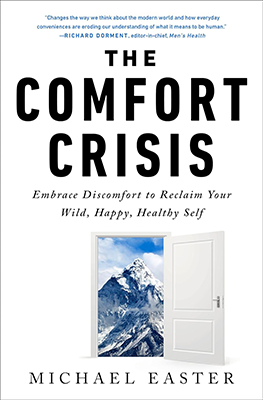
Quiz: The Comfort Crisis by Michael Easter
1. What is the central argument of The Comfort Crisis?
A. Comfort should be pursued at all costs
B. Discomfort leads to personal growth and resilience
C. Modern medicine eliminates the need for challenge
D. Happiness comes from removing all pain
2. Where does Michael Easter travel for his extreme physical challenge?
A. The Andes Mountains
B. The Arctic tundra
C. The Alaskan wilderness
D. The Gobi Desert
3. What is the “Misogi” that Easter writes about?
A. A Japanese form of meditation
B. An annual challenge pushing mental and physical limits
C. A strict dietary regimen
D. A spiritual pilgrimage in Tibet
4. According to Easter, how does modern society’s comfort affect mental health?
A. It increases mental sharpness and memory
B. It has no measurable effect
C. It contributes to anxiety, depression, and dissatisfaction
D. It improves empathy and emotional intelligence
5. What evolutionary argument does Easter make about discomfort?
A. Discomfort has no role in modern life
B. Humans evolved in environments of constant comfort
C. Humans are biologically wired to avoid all stress
D. Humans evolved to thrive through challenge and adversity
Answer Key with Explanations
1. B. Discomfort leads to personal growth and resilience
Explanation: Easter argues that avoiding discomfort weakens us. By deliberately seeking challenges, we build resilience, focus, and purpose.
2. C. The Alaskan wilderness
Explanation: Easter joins a month-long hunting expedition in Alaska, which becomes the backdrop for many of the book’s insights on hardship, solitude, and primal living.
3. B. An annual challenge pushing mental and physical limits
Explanation: The “Misogi” is a concept borrowed from Japanese tradition and repurposed by Easter’s friend Marcus Elliott—doing something really hard and uncertain, once a year, to grow.
4. C. It contributes to anxiety, depression, and dissatisfaction
Explanation: The book connects the constant comfort of modern life with increased psychological distress, arguing that challenge and effort are essential for well-being.
5. D. Humans evolved to thrive through challenge and adversity
Explanation: Easter draws from anthropology and biology to show that humans adapted to difficult environments and removing that struggle leaves us mentally and physically underprepared for life.