

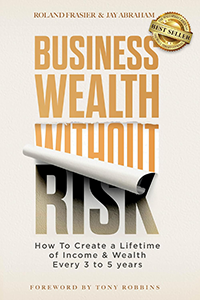
Quiz: Business Wealth Without Risk by Jay Abraham
1. What is one of the core principles emphasized by Jay Abraham in building business wealth without risk?
A) Maximize ROI through speculative investments
B) Increase sales solely through price reductions
C) Leverage underutilized assets and hidden opportunities
D) Focus only on cutting expenses
2. According to Abraham, what is a powerful, often overlooked way to grow a business?
A) Increase staff and product lines immediately
B) Add flashy branding and logos
C) Acquire other businesses aggressively
D) Use joint ventures and strategic alliances
3. Jay Abraham suggests that most businesses fail to:
A) Keep up with technological trends
B) Manage employee satisfaction
C) Capitalize on the full potential of their existing resources
D) Raise enough capital
4. What does Abraham say about risk in business growth strategies?
A) Risk is unavoidable and must be embraced
B) You must accept high risk to earn high reward
C) Smart strategy can eliminate or dramatically reduce risk
D) Risk only applies to startups
5. In Business Wealth Without Risk, Abraham describes the idea of “host-beneficiary relationships.” What is this concept about?
A) Finding angel investors for product launches
B) Licensing intellectual property
C) Partnering with companies who share your audience to promote your offer
D) Hiring influencers to host promotional events
Answer Key & Explanations
1. C) Leverage underutilized assets and hidden opportunities
Explanation: Abraham emphasizes that most businesses already possess assets (like customer lists, strategic partnerships, and systems) that can be optimized to generate substantial wealth without taking on new risks.
2. D) Use joint ventures and strategic alliances
Explanation: Abraham promotes joint ventures as a low-risk, high-reward way to expand reach, reduce customer acquisition costs, and boost revenue using shared audiences or infrastructure.
3. C) Capitalize on the full potential of their existing resources
Explanation: One of Abraham’s foundational teachings is that businesses overlook the assets they already have—such as customer goodwill, referral opportunities, or distribution networks.
4. C) Smart strategy can eliminate or dramatically reduce risk
Explanation: A core thesis of the book is that risk isn’t necessary for growth if you use intelligent, leveraged strategies like performance-based marketing, partnerships, and resource optimization.
5. C) Partnering with companies who share your audience to promote your offer
Explanation: In a host-beneficiary relationship, the “host” company introduces your product or service to their audience (the beneficiary), allowing access to warm leads with little upfront cost.