

Lesson 22: The Pareto Principle
Focus on the Few
QUOTES
The Pareto Principle, often called the 80/20 Rule, reveals a simple but powerful truth: roughly 80% of outcomes stem from just 20% of inputs. In both life and business, this principle highlights the outsized impact of a small subset of efforts. Whether it’s 20% of customers generating 80% of revenue, or 20% of tasks delivering 80% of progress, the message is clear: not all actions are created equal. Focusing on the most leveraged activities that core 20% can dramatically increase efficiency, clarity, and results. It’s a call to simplify, prioritize, and work smarter, not just harder. By identifying and doubling down on what truly moves the needle, teams and individuals free themselves from the illusion of productivity and unlock real momentum. The Pareto Principle isn’t just about working less—it’s about investing attention where it matters most. When applied intentionally, it becomes a compass for high-impact execution.
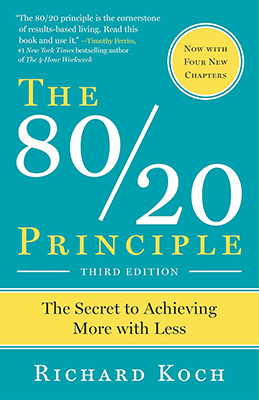
The 80/20 Principle
In “The 80/20 Principle”, Richard Koch explores the powerful idea that 80% of results come from just 20% of efforts—a concept rooted in the Pareto Principle. Koch argues that this imbalance is not only common but predictable across business, time management, relationships, and personal productivity. By identifying and focusing on the most effective 20% of activities, individuals and organizations can achieve more with less effort. The book provides practical strategies to help readers recognize high-impact actions, eliminate low-value tasks, and leverage their time and resources more effectively. Koch also applies the principle to areas like wealth creation, customer relations, and personal happiness, encouraging readers to prioritize what truly matters. Ultimately, the 80/20 Principle offers a blueprint for working smarter, not harder—unlocking efficiency, improving decision-making, and fostering greater success in both professional and personal life by maximizing the small percentage of efforts that yield the greatest returns.