

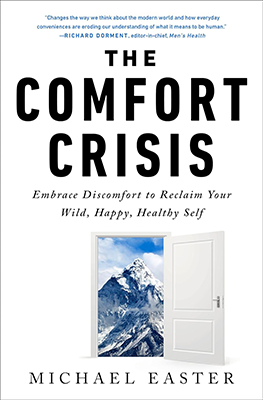
Quiz: The Comfort Crisis by Michael Easter
1. What is the central argument of The Comfort Crisis?
A) Comfort is essential for modern productivity
B) Technology is the main solution to modern stress
C) Discomfort is necessary for growth, happiness, and health
D) Eliminating risk leads to optimal living
2. What challenge did Michael Easter undertake to explore discomfort firsthand?
A) A 90-day silent meditation retreat
B) A 30-day survival course in the Sahara
C) A month-long backcountry hunting expedition in Alaska
D) A year of living without electricity
3. According to Easter, why is modern society considered “too comfortable”?
A) Because we no longer face any competition
B) Because we avoid physical, emotional, and mental challenges
C) Because climate control systems have improved
D) Because we have too much free time
4. What term does Easter use to describe the idea that we’ve lost the benefits of hardship in modern life?
A) Evolutionary mismatch
B) Discomfort deficit
C) Existential laziness
D) Resilience recession
5. Which of the following is a practice Easter recommends for reintroducing healthy discomfort?
A) Fasting, rucking, and cold exposure
B) Journaling and gratitude practices only
C) Meditation retreats in 5-star hotels
D) Virtual reality stress simulations
Answer Key & Explanations
1. C) Discomfort is necessary for growth, happiness, and health
Explanation: The book argues that modern life has become too easy, and by intentionally embracing discomfort, we can unlock better physical health, mental resilience, and overall life satisfaction.
2. C) A month-long backcountry hunting expedition in Alaska
Explanation: Easter embarks on a physically and mentally grueling hunt in the Alaskan wilderness to explore the psychological effects and value of discomfort in modern life.
3. B) Because we avoid physical, emotional, and mental challenges
Explanation: Easter suggests that our comfort-centric culture shields us from challenges that are essential for growth, making us more anxious, less resilient, and ultimately less fulfilled.
4. A) Evolutionary mismatch
Explanation: Easter discusses how our modern environment clashes with what our bodies and brains evolved for—more physically demanding, less predictable lives—leading to a host of modern problems.
5. A) Fasting, rucking, and cold exposure
Explanation: These are among the practices Easter highlights that help reintroduce manageable discomfort into our lives, promoting strength, clarity, and well-being.