

Lesson 5: Take Responsibility
Own it All
QUOTES
Take Full Responsibility: Own it all success begins with taking full responsibility—for your actions, your results, and your mindset. This means no blaming others, no waiting for circumstances to change, and no excuses. When you own everything in your life, you gain the power to change it. Blame and excuses feel easier in the short term, but they strip you of control. They keep you stuck. In contrast, responsibility builds momentum. When something goes wrong, you ask, “What can I do to improve this?” That question alone opens the door to growth. Mindset matters too. Choosing to stay positive, focused, and solution-oriented is part of taking responsibility. You control how you think, and that shapes your results. Leaders, high achievers, and respected professionals all have this in common—they own their outcomes. Taking full responsibility may be tough at times, but it’s the foundation of progress, trust, and long-term success.
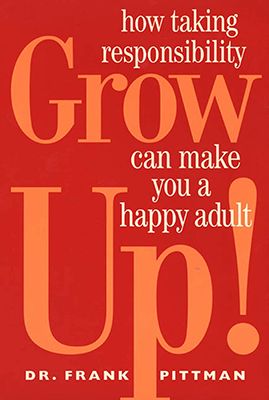
Grow Up
Grow Up
In “Grow Up: How Taking Responsibility Can Make You a Happy Adult”, Dr. Frank Pittman delivers a bold and insightful examination of what it means to truly become an adult. He challenges the modern cultural glorification of youth, rebellion, and self-indulgence, arguing that many adults remain emotionally immature, trapped in a mindset of blame and victimhood. Rather than confronting life’s difficulties with accountability, they seek to avoid discomfort and responsibility, often confusing happiness with the pursuit of constant pleasure. Pittman asserts that genuine happiness is not found in the evasion of responsibility but in the embrace of it. He posits that maturity, integrity, and personal honor are the foundations of a meaningful and satisfying life.
Drawing from decades of clinical experience, as well as references to popular culture, literature, and film, Pittman critiques the post-WWII shift that idealized adolescence and undermined traditional adult roles. He illustrates how this cultural shift encouraged individuals to prioritize emotional gratification and rebellion over duty, commitment, and resilience. The book explores this theme across various domains of adult life, including relationships, marriage, parenting, gender roles, and mental health. Pittman stresses that real adulthood involves making conscious, sometimes uncomfortable choices, such as staying committed to a marriage through hardship, setting firm boundaries as a parent, or owning one’s mistakes rather than blaming others. He believes that avoiding these challenges not only stunts emotional growth but also leads to feelings of depression and emptiness.
Pittman also critiques the modern notion that we should always feel good, arguing instead that emotional struggle and responsible behavior are necessary for personal growth and long-term well-being. He presents adulthood not as a dull or oppressive burden, but as a noble and rewarding journey that allows for the development of competence, self-respect, and deep, meaningful relationships. Through vivid storytelling and sharp humor, he brings psychological principles to life, making them accessible and relevant to anyone struggling with the transition into—or the maintenance of—genuine adulthood.
Ultimately, Grow Up is a call to action. It urges readers to stop making excuses, to stop waiting for someone else to fix their lives, and to start acting like adults in the truest sense. Pittman’s voice is both compassionate and challenging, reminding us that maturity is not about giving up joy but about discovering a richer, deeper form of happiness that only responsibility can bring.