
Formal Education Versus Self-Education
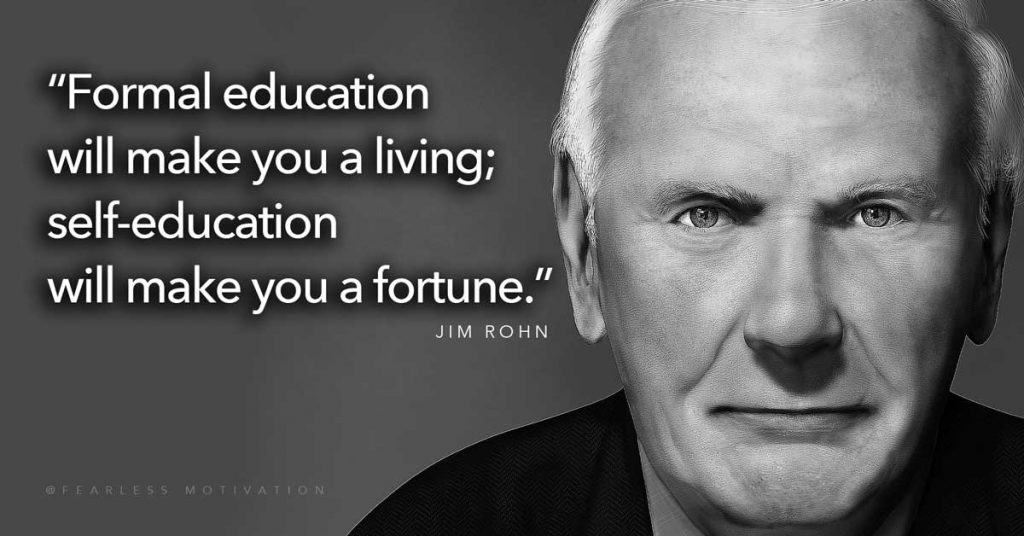
Jim Rohn’s quote, “Formal education will make you a living; self-education will make you a fortune,” captures a powerful truth about success in both finances and life. Formal education is often the first major step people take toward building a stable future. It provides structure, foundational knowledge, and credentials that open doors to jobs. However, while schooling can help someone earn a living, it is self-education—the ongoing, independent pursuit of knowledge—that leads to greater prosperity, deeper personal growth, and the ability to create value far beyond the limits of a classroom.
Formal education plays an essential role in preparing individuals for employment. Through school, students learn core skills such as reading, writing, math, and communication. These skills are necessary for functioning in the modern workplace and are often requirements for professional careers. A diploma or degree also signals to employers that someone has met certain standards and can be trusted with responsibilities. In this way, formal education provides a foundation for stability. It can help people qualify for jobs, earn a salary, and support themselves. For many, that stability is a major achievement and an important milestone.
Yet formal education alone often teaches people how to follow instructions rather than how to innovate. Traditional schooling is designed to deliver information, test knowledge, and reward memorization. While this system builds useful skills, it rarely teaches students how to think creatively, take risks, build businesses, or adapt to rapid changes in society and technology. In the real world, earning a paycheck does not automatically lead to wealth, freedom, or fulfillment. Many people with degrees still struggle financially because they rely only on what they were taught in school and stop learning once they graduate.
This is where self-education becomes transformative. Self-education means taking personal responsibility for growth, seeking knowledge beyond required classes, and staying curious throughout life. It involves reading books, learning new skills, studying successful people, and exploring ideas that are not assigned but chosen. Unlike formal schooling, self-education is fueled by initiative. It allows individuals to learn exactly what they need to solve real problems, improve their abilities, and create opportunities. This type of learning is what separates those who simply work for income from those who build wealth by creating value.
Financial prosperity is often tied to the ability to solve problems and meet needs in meaningful ways. Self-education helps people develop that ability. When someone learns independently, they can gain skills in leadership, investing, entrepreneurship, technology, and communication—areas that often generate higher income and greater freedom. More importantly, self-education encourages action. Knowledge becomes powerful when applied, and those who seek learning on their own often develop the confidence to take initiative, start projects, and build something valuable.
Ultimately, Jim Rohn’s quote reminds us that formal education is a starting point, not a finish line. School can provide the tools to survive and work, but self-education provides the mindset and abilities to thrive. By continuing to learn, taking initiative, and applying knowledge in real life, individuals can grow beyond the classroom and achieve lasting success—both financially and personally.
Recent Comments