
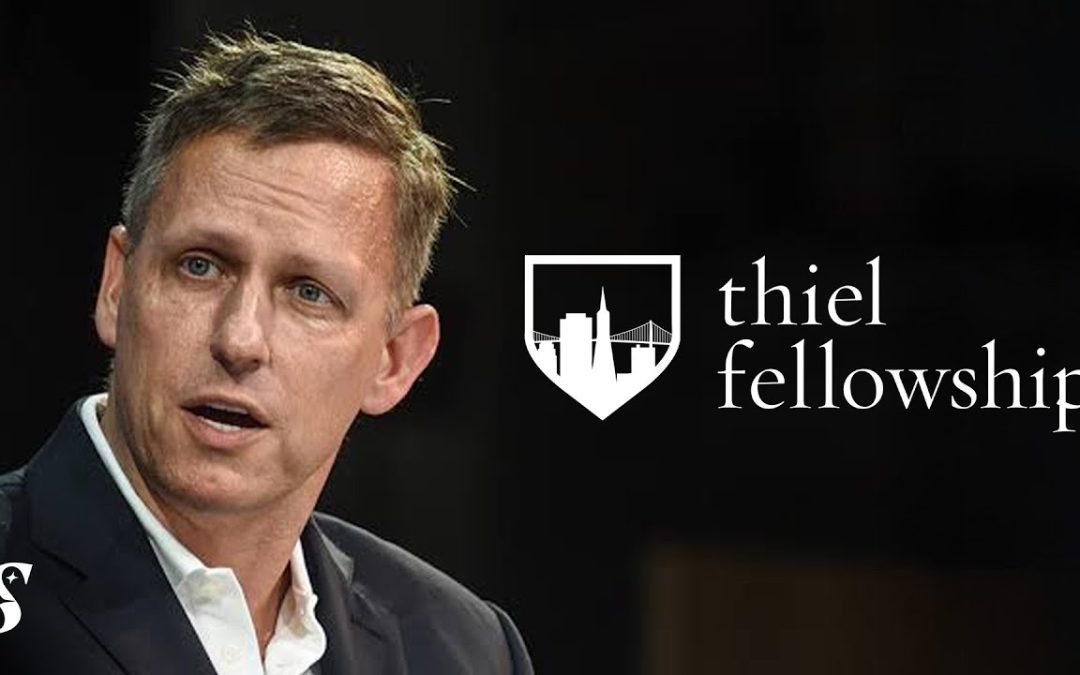
The Thiel Foundation
The rising cost of higher education and growing dissatisfaction with traditional college pathways have pushed many young people to consider alternatives. One of the most influential—and controversial—options is the Thiel Foundation, best known for supporting the Thiel Fellowship. Funded by entrepreneur and investor Peter Thiel, the foundation’s approach challenges the assumption that college is the best or only route to success. By offering financial support and a high-powered network to young innovators who choose to skip or leave college, the Thiel Foundation has become a symbol of the modern “anti-college” movement.
The Thiel Fellowship offers selected applicants—typically under the age of 23—a grant of $100,000 over two years to pursue entrepreneurial projects, scientific research, or other ambitious work outside of school. In practical terms, it replaces tuition payments and student loans with funding for experimentation and real-world learning. Instead of spending years earning credits, fellows are encouraged to build products, launch companies, conduct research, or apprentice themselves to experts. The foundation frames education as something that happens through doing: making, testing, and improving ideas at full speed.
As an alternative to college, the Thiel Foundation provides several unique benefits. First, it rewards independence. Fellows must plan their own learning, develop discipline, and build skills through direct experience rather than academic structure. Second, it offers mentorship and connections that can rival—or surpass—traditional university networks. Many college students hope internships will open doors, but the fellowship often places participants directly into circles of entrepreneurs, investors, and technologists. Finally, the fellowship reduces one of the biggest barriers to opportunity: debt. Because the grant is not a loan, fellows can focus on innovation without worrying about tuition bills and long-term repayment.
Success stories help explain why the fellowship draws so much attention. One famous example is Vitalik Buterin, who became a Thiel Fellow after leaving college and went on to co-found Ethereum, one of the most important platforms in blockchain technology. His career shows how quickly independent learners can create global impact when they have time, funding, and an ambitious project. Another widely known fellow is Dylan Field, who left college to pursue design software and later co-founded Figma, a tool that transformed how designers collaborate online. Figma’s eventual acquisition by Adobe (even amid regulatory debate) demonstrated that fellowship-backed ideas can scale into industry-defining companies. Similarly, Laura Deming used the fellowship to pursue breakthroughs in longevity research, highlighting that the program supports not only startups, but also unconventional scientific paths that may not fit neatly within a university system.
However, the Thiel Foundation’s model is not for everyone. College still offers structure, social development, and a broad educational base that many students need. Leaving school can be risky for people who lack a clear project, strong support, or the motivation to self-direct their education. The fellowship is also extremely selective, meaning it cannot serve most students. And for fields that require formal credentials—such as medicine, law, or teaching—college remains the most reliable pathway.
Ultimately, the Thiel Foundation represents a bold vision of education based on action rather than tradition. It argues that for some people, the best learning happens outside classrooms through building something meaningful in the real world. While it cannot replace college for most students, its success stories prove that alternative paths can be powerful for those ready to take them.
Recent Comments