
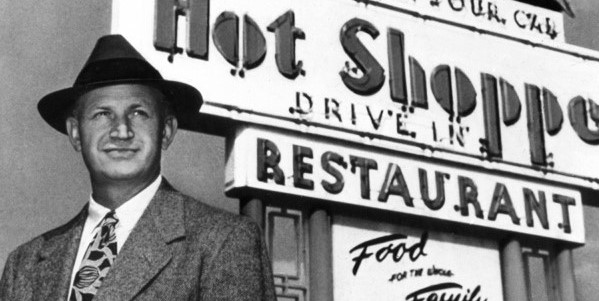
John Willard Marriott
Willard Marriott’s story is a classic American example of persistence, reinvention, and learning from failure. Long before his name became synonymous with one of the world’s largest hospitality companies, Marriott experienced setbacks that could have ended his ambitions. His journey from a failed sheep herder to the founder of Marriott Hotels shows how adaptability and steady execution often matter more than a flawless start.
Willard Marriott was born in 1900 in Utah and grew up in a hardworking Mormon family. Like many young men of his era, he tried his hand at several ventures early in life. One of his first attempts at business involved sheep herding, an occupation that promised independence but carried real risk. Marriott struggled in this role. The work was physically demanding, unpredictable, and financially unstable. Rather than becoming a stepping stone to success, sheep herding became a lesson in what didn’t work for him. Importantly, Marriott didn’t interpret this failure as a verdict on his ability—he treated it as feedback.
After serving a mission in New England, Marriott moved east with his wife, Alice, to Washington, D.C. It was there, in 1927, that the couple made a modest but pivotal decision. They opened a small root beer stand called A&W Root Beer, aimed at serving refreshing drinks to people during hot summers. The idea was simple, and the operation was small, but Marriott approached it with discipline and attention to detail. He focused on cleanliness, consistency, and customer experience—values that would later define his empire.
When colder weather arrived and root beer sales dropped, Marriott adapted rather than quit. He expanded the menu to include hot food, turning the stand into a restaurant. This flexibility became a defining trait of his career. Instead of clinging to a single idea, Marriott paid attention to demand and adjusted accordingly. Over time, the business evolved into a chain of restaurants called The Hot Shoppes, which became well known in the Washington, D.C. area for quality and reliability.
Marriott’s entry into hotels came later and almost indirectly. Through operating restaurants, he noticed a recurring problem: travelers needed clean, dependable places to stay. In 1957, Marriott opened his first hotel, the Twin Bridges Motor Hotel in Arlington, Virginia. It wasn’t luxurious, but it was well-run. Marriott applied the same principles he had learned in food service—standardization, efficiency, and customer focus. He believed that people valued predictability: knowing what to expect, no matter where they were.
That belief became the foundation of Marriott Hotels’ success. Under Willard Marriott’s leadership, the company expanded steadily rather than recklessly. He emphasized long-term thinking, employee training, and operational systems. Marriott understood that businesses scale best when values scale with them. He famously prioritized taking care of employees, believing that satisfied employees would take better care of customers.
By the time of his death in 1985, Willard Marriott had transformed a failed early venture and a small root beer stand into a global hospitality brand. His life illustrates a crucial lesson: failure is often an early chapter, not the final one. Marriott didn’t succeed because he avoided mistakes—he succeeded because he learned, adapted, and stayed focused on execution.
Willard Marriott’s legacy is not just a chain of hotels; it is a reminder that progress is rarely linear. Sometimes the path to building something lasting begins with discovering what you are not meant to do—and having the courage to try again.
Recent Comments