
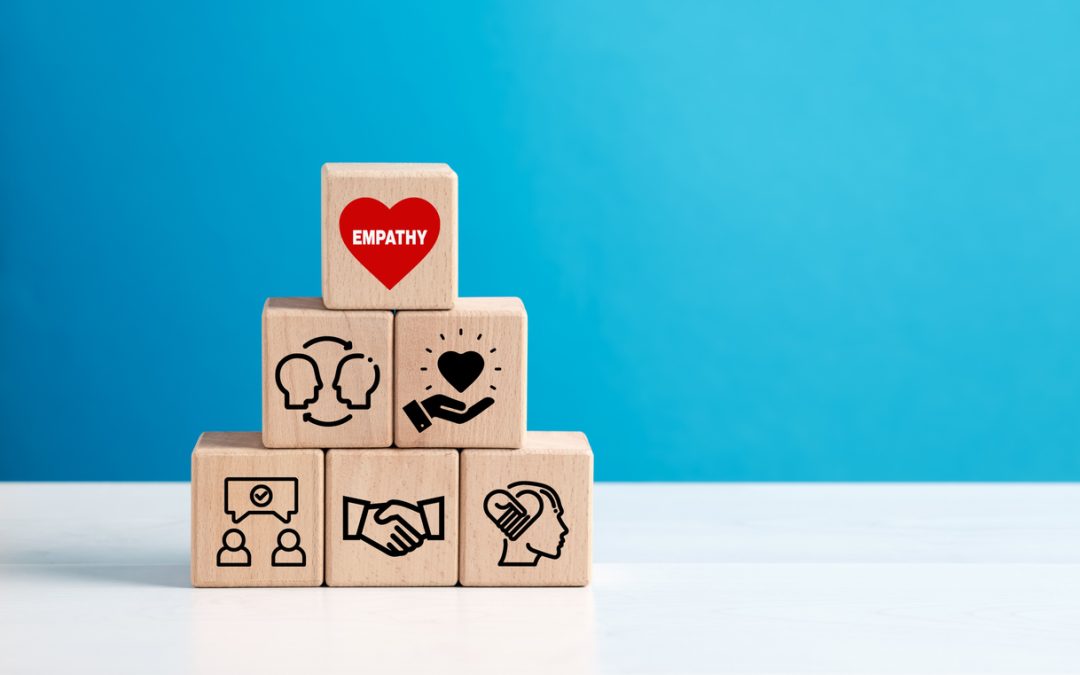
Deep Empathy
Deep empathy is more than being nice, polite, or emotionally sensitive. It is the ability to enter another person’s inner world and understand it from the inside. It means not only feeling what someone might feel, but also seeing what they see—interpreting a situation through their point of view, their assumptions, their fears, and their hopes. Deep empathy is the skill of understanding how someone is processing the world, even when their reactions are different from ours. It is compassionate, clarifying, and often transformational in relationships, leadership, and business.
Most people experience empathy at a surface level: “That must be hard,” or “I’m sorry you’re going through that.” That kind of empathy matters, but deep empathy goes further. It tries to understand the logic of another person’s emotions. For example, instead of dismissing someone as “overreacting,” deep empathy asks: What story are they telling themselves right now? What does this situation mean to them? What experiences shaped the way they respond? When we understand the meaning behind someone’s emotions, we can relate to them more honestly. We stop treating people like puzzles to solve or problems to manage, and start treating them like humans to understand.
Deep empathy also acknowledges a crucial truth: we are not all wired the same. In fact, we are all wired differently. Some people are naturally more anxious and threat-aware. Others are more confident and risk-tolerant. Some process emotions quickly and express them openly. Others internalize and need time to articulate what they feel. Some people are sensitive to tone and subtle signals, while others focus primarily on facts and outcomes. Deep empathy respects this diversity. It recognizes that another person’s reaction isn’t necessarily irrational—it may simply be consistent with how they are built and what they’ve lived through. Empathy doesn’t require agreement. It requires understanding.
This trait is the opposite of being self-centered. A self-centered person interprets everything through one lens: their own. They assume their perspective is the default and their needs are the main priority. A sociopath, in the deeper sense, may understand others cognitively but lacks compassion or moral concern, using insight as a tool for manipulation. Deep empathy, by contrast, combines understanding with care. It refuses to use another person’s vulnerability as leverage. It sees people as ends, not means. It values the humanity of the other person even when their emotions are inconvenient.
Deep empathy is powerful because it builds trust. People don’t open up to those who are merely intelligent; they open up to those who make them feel understood. Feeling understood is one of the most healing experiences a person can have. It reduces defensiveness, lowers conflict, and creates connection. In relationships, deep empathy can transform arguments into conversations. It can turn “You’re wrong” into “Help me understand what this feels like for you.” That shift is often the difference between repeated friction and lasting intimacy.
In business and leadership, deep empathy is an underrated competitive advantage. Great leaders don’t just manage tasks—they manage people. And people are complex. Deep empathy helps leaders anticipate how decisions will land emotionally, not just logically. It improves communication, because it helps you speak in a way others can receive. It strengthens negotiation, because you understand what the other side actually values. It improves customer insight, because you can imagine what users experience, what frustrates them, and what would delight them. Empathy becomes a form of intelligence that helps you solve real-world problems more effectively.
Ultimately, deep empathy is not weakness. It is strength with compassion. It is perception with humility. It is the ability to step outside your own mind long enough to honor the reality of another person. In a world full of self-protection, judgment, and distraction, deep empathy stands out like rare skill—and it can become one of the most meaningful tools for success, connection, and real human influence.
Recent Comments