
Relationship vs Transactional Marketing
Relational marketing and transactional marketing represent two distinct philosophies in how businesses approach customers, generate revenue, and define success. While both aim to drive sales and profitability, they differ fundamentally in time horizon, customer engagement strategy, and measures of value.
Transactional marketing is focused on individual sales. Its primary objective is to maximize the efficiency and volume of single exchanges between a company and its customers. The emphasis is on short-term results: closing the deal, meeting quarterly targets, and increasing immediate revenue. In this approach, marketing strategies often center around promotions, discounts, advertising campaigns, and persuasive messaging designed to trigger quick purchasing decisions. Customer interactions are typically limited to the point of sale, and once the transaction is complete, the relationship may effectively end until the next buying opportunity arises.
This approach is particularly effective in markets where products are standardized, price competition is strong, and customer switching costs are low. For example, fast-moving consumer goods, retail sales events, and e-commerce flash deals often rely heavily on transactional marketing tactics. Success is measured through metrics such as sales volume, conversion rates, cost per acquisition, and short-term return on investment. The core assumption behind transactional marketing is that customers are primarily motivated by price and convenience, and that repeat purchases will occur if the offer is competitive enough.
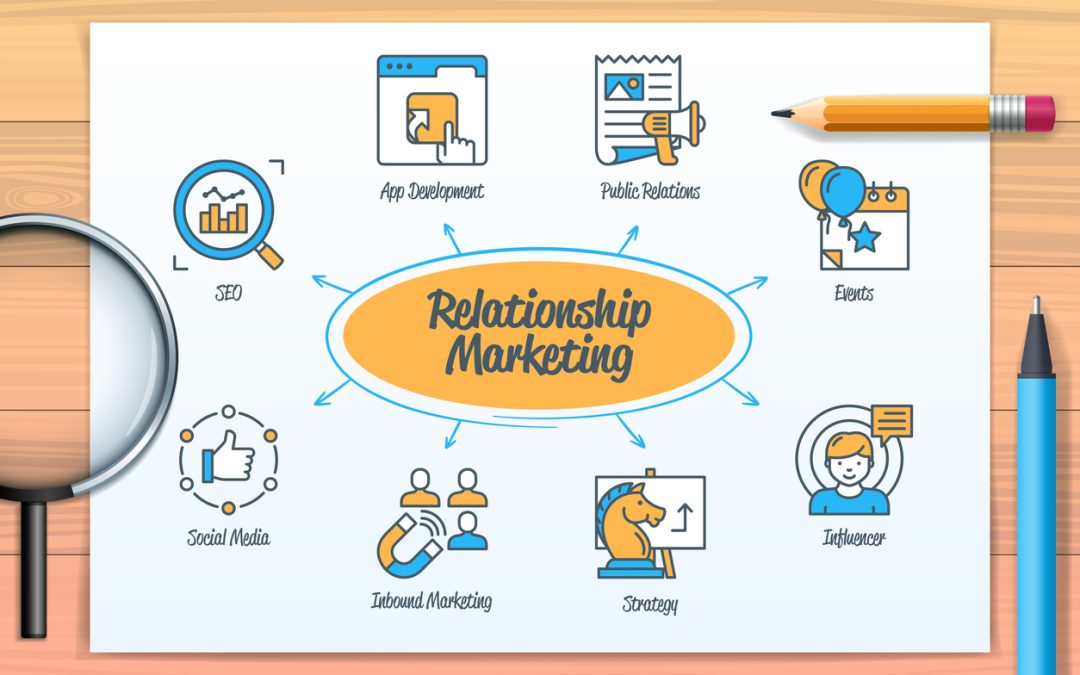
In contrast, relational marketing (often called relationship marketing) emphasizes building long-term connections with customers. Rather than focusing on a single sale, the goal is to cultivate loyalty, trust, and ongoing engagement over time. Companies practicing relational marketing invest in understanding customer needs, preferences, and behaviors in order to deliver personalized experiences and consistent value. The relationship does not end after the first purchase; instead, that purchase is seen as the beginning of an ongoing interaction.
Relational marketing strategies may include loyalty programs, personalized communication, customer service excellence, community building, and content marketing that educates or entertains. Brands aim to create emotional connections and brand affinity, recognizing that customer retention is often more profitable than constant acquisition. Metrics in relational marketing extend beyond immediate sales to include customer lifetime value (CLV), retention rates, repeat purchase frequency, and customer satisfaction or advocacy scores.
One of the key differences between the two approaches lies in cost structure and profitability over time. Transactional marketing often requires continuous investment in advertising and promotions to attract new buyers. In contrast, relational marketing seeks to reduce acquisition costs by retaining existing customers and encouraging referrals. While relationship-building can require upfront investment in systems, service, and communication, it can produce more stable and predictable revenue streams in the long run.
Another distinction involves communication style. Transactional marketing tends to be one-way and persuasive: the company broadcasts offers and customers respond. Relational marketing is more interactive and dialog-based, involving feedback loops, social engagement, and ongoing conversation.
Importantly, these approaches are not mutually exclusive. Many successful businesses integrate both strategies—using transactional tactics to attract new customers and relational strategies to nurture them afterward. However, the shift toward digital platforms, data analytics, and customer-centric business models has made relational marketing increasingly important in competitive markets.
Ultimately, the difference between relational and transactional marketing reflects a broader strategic choice: whether to prioritize immediate exchanges or enduring partnerships. Companies that understand when and how to apply each approach can create both short-term momentum and long-term brand value.
Recent Comments