
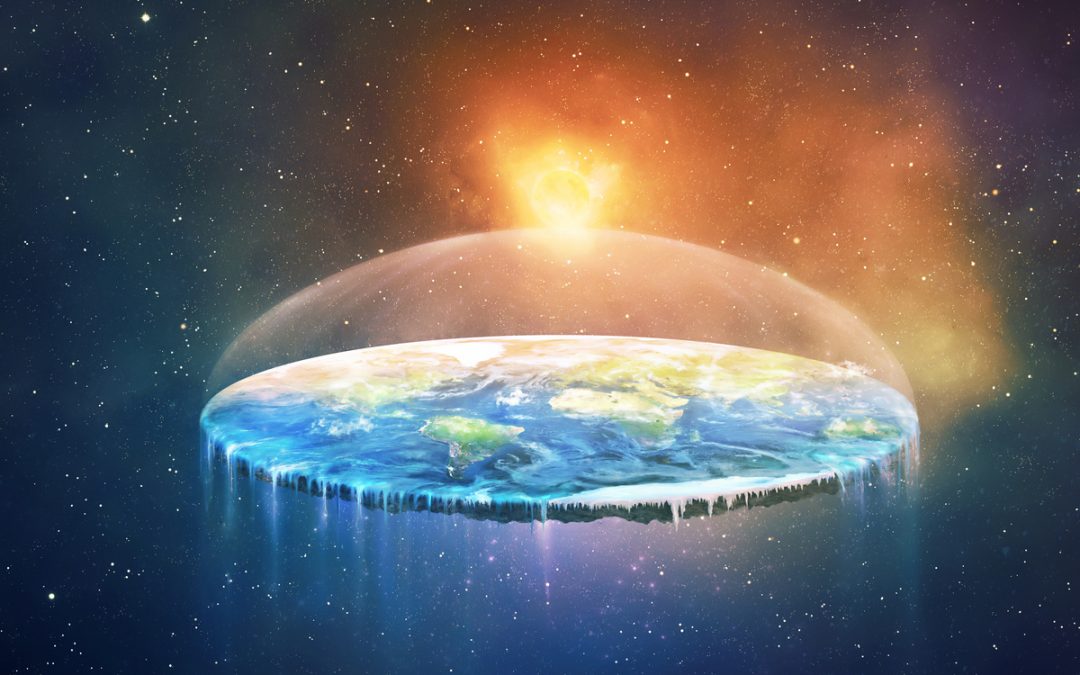
Why Are There Flat Earthers?
Belief in a flat Earth can seem baffling in an age of satellites, space travel, and global navigation systems. Yet flat-Earth beliefs persist, and understanding why people hold them requires more than dismissing believers as ignorant or irrational. In most cases, flat-Earth belief is not about geometry—it is about psychology, trust, identity, and how people make sense of a complex world.
One major factor is distrust of authority. Many flat earthers do not start with the belief that the Earth is flat; they start with the belief that powerful institutions lie. Governments, scientists, media, and corporations are seen as self-interested and deceptive. Once that distrust takes root, mainstream explanations—no matter how well supported—are interpreted as propaganda rather than evidence. Flat-Earth theory becomes less about proving an alternative model and more about rejecting the credibility of those in power. In this way, the belief functions as a protest against authority rather than a scientific claim.
Another powerful driver is cognitive bias, especially confirmation bias. People naturally seek information that supports what they already believe and dismiss information that challenges it. Online platforms amplify this tendency. Someone curious about flat-Earth ideas can quickly find videos, forums, and influencers that reinforce the belief, creating an echo chamber. Contradictory evidence—such as satellite imagery or physics explanations—is reframed as fake, staged, or manipulated. Once a belief becomes part of a closed system, it becomes self-sealing: any counter-argument is treated as proof of the conspiracy.
Identity and belonging also play a significant role. Flat-Earth communities offer something many people crave: a sense of being special, awakened, or part of a small group that “knows the truth.” Believers often describe themselves as critical thinkers who refuse to blindly accept what they’re told. This identity can be emotionally rewarding, especially for people who feel marginalized, powerless, or overlooked in other areas of life. Challenging the belief then feels like a personal attack—not just on an idea, but on the person’s sense of self and community.
There is also a misunderstanding of how science works. Science is often seen as a collection of absolute claims rather than a process of testing, revising, and refining models. Flat earthers may point to gaps in their own understanding or anomalies they perceive and interpret those as evidence that the entire scientific framework is fraudulent. They may expect simple, visual proofs and become suspicious of abstract concepts like gravity, orbital mechanics, or relativity. When explanations feel inaccessible, people may reject them altogether and favor explanations that feel more intuitive, even if they are incorrect.
Emotional factors matter as well. Flat-Earth belief can provide certainty in an uncertain world. Modern life is complex, fast-changing, and often overwhelming. Conspiracy-based worldviews offer a simple narrative: there is a hidden truth, a clear enemy, and a small group of people brave enough to see through the lie. That clarity can feel comforting. It replaces ambiguity with purpose.
Importantly, ridicule tends to reinforce these beliefs rather than weaken them. Mockery confirms the believer’s view that outsiders are arrogant, dismissive, or afraid of the truth. Productive engagement requires empathy without endorsement—understanding the emotional and psychological needs behind the belief while maintaining respect for evidence and reality.
In the end, flat-Earth belief is less about the shape of the planet and more about how people relate to knowledge, authority, and meaning. It reflects deeper struggles with trust, identity, and belonging in a world where information is abundant but confidence in institutions is fragile. Understanding that does not mean accepting the belief—but it does explain why it persists.
Recent Comments