
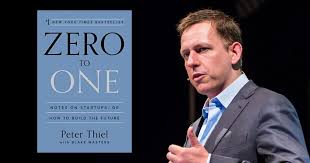
Zero to One
Peter Thiel’s Zero to One presents a philosophy of entrepreneurship that challenges the traditional belief that success comes from working harder, competing better, or iterating slightly faster than everyone else. Thiel argues that the most valuable businesses are not built by copying what already exists. They are built by discovering a contrarian truth—something important that is true, but that most people either ignore, misunderstand, or actively disagree with. In his view, the biggest breakthroughs happen when an entrepreneur sees what others cannot yet see and then builds a company around that hidden reality. Going from “zero to one” means creating something genuinely new, not simply improving what already exists.
Thiel believes every great company begins with a question: “What valuable company is nobody building?” The answer often requires the courage to hold an unpopular opinion. Contrarian truths are uncomfortable because they go against consensus, and consensus feels safe. But safety rarely produces extraordinary returns. If everyone already believes something is true, the market has already priced it in. The opportunity is gone. The real opportunity lies where there is uncertainty—where the world hasn’t caught up yet. Thiel’s core message is that progress happens when someone correctly bets on a truth that most others miss, and then executes before it becomes obvious.
This is also why Thiel is skeptical of the idea that competition is inherently good. While competition can push people to improve, he argues it often traps companies into sameness. In competitive markets, businesses focus on fighting for small advantages: slightly cheaper pricing, slightly better features, slightly faster service. The result is often shrinking profit margins and constant pressure. Many companies end up working harder just to stay alive. According to Thiel, this is one of the main reasons businesses fail—not because they lack effort or intelligence, but because they never escape competition long enough to build real power.
Thiel famously states that monopolies are better than competitors—not the kind of monopoly created by unfair coercion, but the kind created by superior innovation. A strong company is one that becomes so unique and valuable that it effectively owns its market category. It stops competing head-to-head and starts defining the rules of the game. This is where profits, leverage, and durability are created. In Thiel’s philosophy, the goal is not to win a crowded race. The goal is to create a new race where you’re the only runner.
This is why many businesses fail: they enter markets where it is too easy to compete. If the product is easy to replicate and customers are quick to switch, the company becomes trapped in a constant struggle. It must spend heavily on advertising, discounting, and sales just to survive. Even if it grows, growth may not equal profit. Escaping competition requires building something defensible: a technology advantage, a powerful network effect, a brand people trust deeply, unique distribution, or an economic moat that makes imitation difficult.
Thiel’s contrarian approach also implies that entrepreneurs must think beyond “incremental improvement.” He believes small improvements are not enough to create lasting dominance. A company must offer a solution so much better than the alternatives that people can feel the difference immediately. That leap—doing something ten times better, or serving a need no one else is addressing—creates a new reality and a new market. It turns innovation into inevitability.
Ultimately, Zero to One is a call to think independently. Thiel argues that the future is not random—it is built by people willing to see beyond the obvious and act with conviction. Betting on a contrarian truth is risky, but it is also where the greatest reward lives. And escaping competition is not just a business tactic—it is the difference between struggling forever and building something that actually lasts.
Recent Comments