
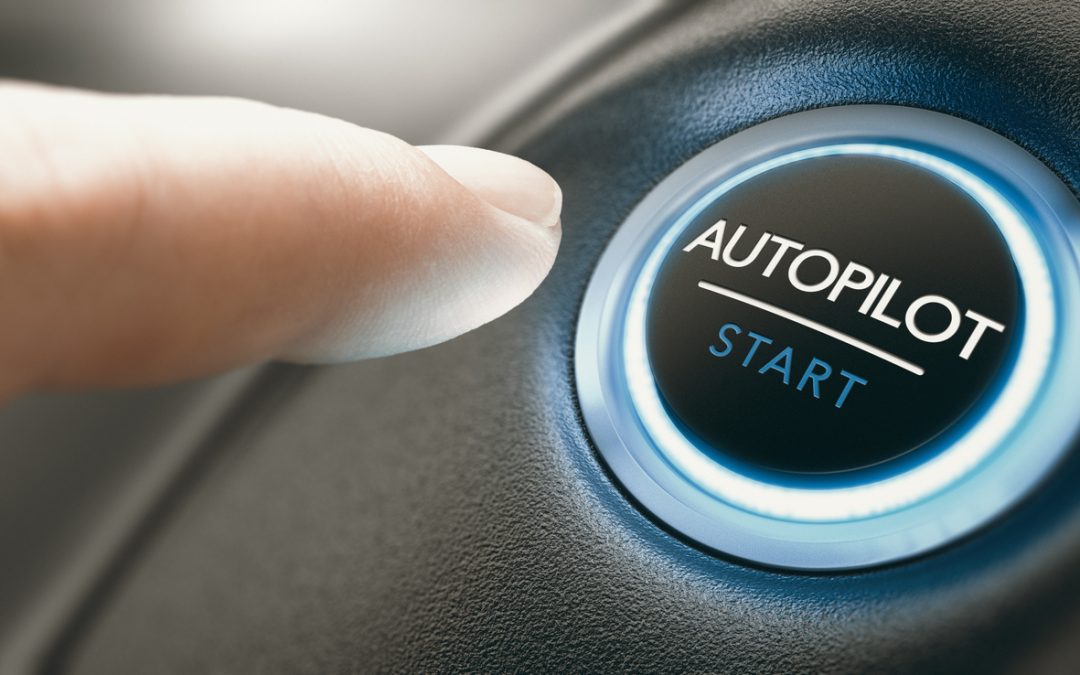
Disengage Autopilot
Much of modern life is lived on autopilot. We wake up, reach for our phones, follow familiar routines, react to emails, conversations, and stressors in predictable ways—all without fully noticing what we’re doing or why. This “auto pilot mode” is not inherently bad; in fact, it helps conserve mental energy by turning repeated behaviors into habits. But when too much of our life runs unconsciously, we risk drifting through days, decisions, and even relationships without intention. Disengaging autopilot, then, becomes an essential act of reclaiming awareness.
Autopilot is built from programmed behavior—patterns shaped by past experiences, cultural expectations, and repetition. These patterns can be useful, like brushing your teeth or driving a familiar route. However, they can also lock us into reactions that no longer serve us: snapping at a coworker, procrastinating on meaningful work, or defaulting to distractions when discomfort arises. Because these responses feel automatic, they often go unquestioned. We mistake familiarity for correctness.
Breaking out of autopilot begins with awareness, which is deceptively simple and surprisingly difficult. It requires noticing what you’re doing in real time—your thoughts, emotions, and physical sensations—without immediately acting on them. This might look like pausing before responding in a tense conversation or catching yourself mid-scroll and asking, “Why am I doing this right now?” These small interruptions create space between stimulus and response, and in that space lies choice.
However, cultivating this awareness takes effort and energy. Our brains are wired to favor efficiency, and conscious attention is metabolically expensive. It’s easier to fall back into habits than to question them. This is why disengaging autopilot can feel uncomfortable, even exhausting at first. You may become more aware of dissatisfaction, anxiety, or boredom that was previously masked by routine. In a sense, waking up requires confronting what you’ve been avoiding.
Yet the benefits of this effort are significant. When you step out of autopilot, you regain agency over your actions. Instead of reacting impulsively, you can respond thoughtfully. This can improve relationships, as you become more present and less governed by defensive or habitual reactions. It can also enhance productivity and creativity, as you make intentional choices about how to spend your time and energy rather than defaulting to easy distractions.
Moreover, disengaging autopilot deepens your experience of life itself. Moments become more vivid when you’re actually paying attention—whether it’s a conversation, a meal, or a walk outside. Instead of time blurring together, you begin to notice details, patterns, and opportunities that were previously invisible. Life feels less like something that is happening to you and more like something you are actively participating in.
Ultimately, breaking out of autopilot is not about eliminating habits altogether but about choosing them consciously. It’s about periodically stepping back, examining your patterns, and deciding whether they align with who you want to be. This ongoing process requires intention, patience, and energy—but it offers something invaluable in return: the ability to live not just efficiently, but deliberately.
Recent Comments